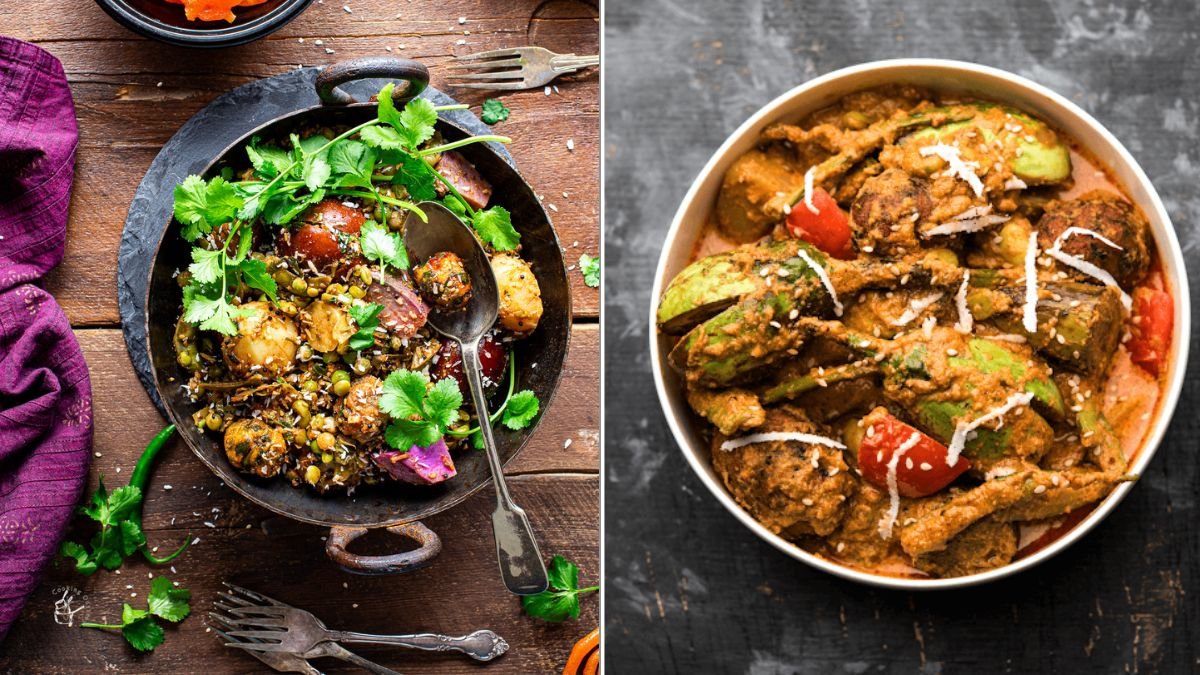
Few dishes capture the warmth and heritage of Gujarat quite like Undhiyu — a colorful medley of winter vegetables, spices, and dumplings that comes together in a single pot of pure comfort. Traditionally prepared during the colder months, this classic dish is a celebration of seasonal produce and the spirit of togetherness.
Originating from Surat, the name “Undhiyu” comes from the Gujarati word “undhu”, meaning “upside down.” Traditionally, it was cooked in earthen pots that were placed upside down underground and heated from above. But don’t worry — you don’t need clay pots or open fires to make it today! With this easy 5-step guide, you can recreate the authentic taste of Undhiyu right in your kitchen using a regular pan or pressure cooker.
Get ready for a burst of flavor, color, and aroma that’s as festive as it is comforting.
Step 1: Gather and Prep the Ingredients
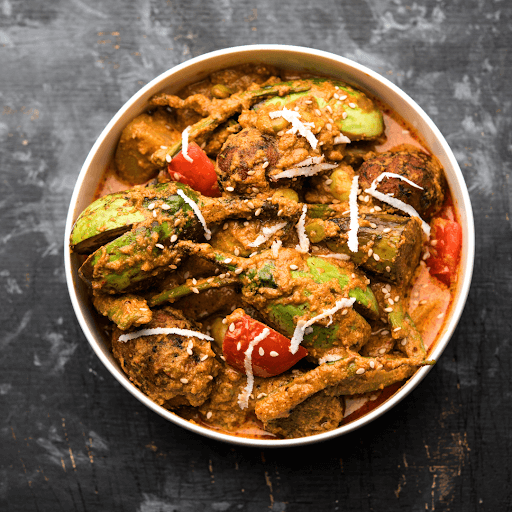
Undhiyu’s magic lies in its variety — it’s packed with fresh winter vegetables, spices, and fenugreek dumplings (muthiyas). The preparation may look lengthy, but once everything’s ready, cooking becomes effortless.
Vegetables (wash, peel, and chop as needed):
- 1 cup surti papdi (hyacinth beans) – seeds and pods separated
- 1 cup small baby potatoes, halved
- 1 cup purple yam (kand), cubed
- 1 cup sweet potatoes, cubed
- 1 raw banana, cut into pieces
- 8–10 small brinjals (baby eggplants), slit but not cut through
- 1 cup green peas (fresh or frozen)
For the Methi Muthiyas (fenugreek dumplings):
- 1 cup fresh fenugreek leaves (methi), finely chopped
- ½ cup whole wheat flour
- ½ cup gram flour (besan)
- 1 tablespoon semolina (optional, for crispness)
- 1 teaspoon ginger-green chili paste
- 1 teaspoon red chili powder
- ½ teaspoon turmeric powder
- 1 teaspoon sugar
- ½ teaspoon carom seeds (ajwain)
- Salt to taste
- 1 tablespoon lemon juice or yogurt
- 1 tablespoon oil
For the Green Masala (spice paste):
- 1 ½ cups fresh coriander leaves
- ¼ cup grated fresh coconut
- 3–4 green chilies
- 1-inch piece ginger
- 4–5 garlic cloves
- 2 tablespoons lemon juice
- 1 tablespoon sesame seeds
- 1 teaspoon cumin seeds
- 1 teaspoon sugar
- Salt to taste
- 2 tablespoons oil
Blend all the above into a coarse paste using minimal water.

Pro Tip:
You can also add 2 tablespoons roasted peanuts to the green masala for a richer flavor and texture.
Step 2: Make the Methi Muthiyas
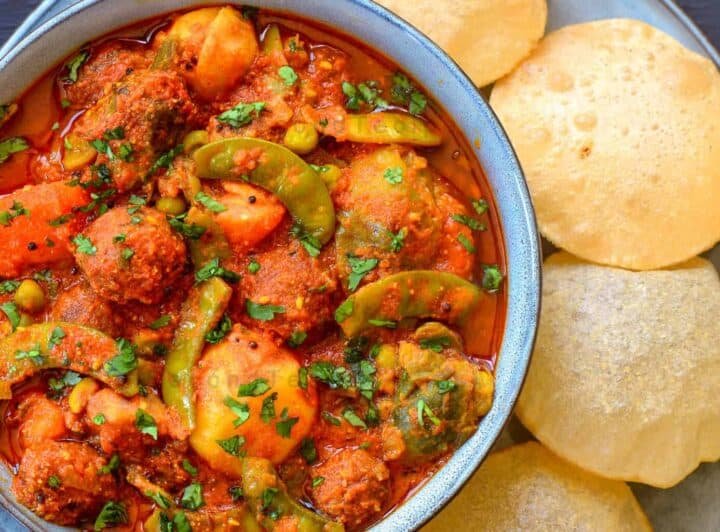
These little dumplings are the heart of Undhiyu — they add flavor, texture, and soak up the masala beautifully.
- Combine all the muthiya ingredients in a mixing bowl.
- Add water little by little and knead into a soft but firm dough.
- Divide into small portions and shape into oval or round dumplings.
- Heat oil in a pan and fry the muthiyas on medium flame until golden brown and crisp.
You can also steam them for a lighter version — just like steamed dhokla.
Once done, keep them aside for later.
Pro Tips:

- If frying, don’t overcrowd the pan — fry in batches for even cooking.
- The muthiyas should be firm enough to hold their shape when mixed with vegetables later.
Step 3: Prepare and Stuff the Vegetables
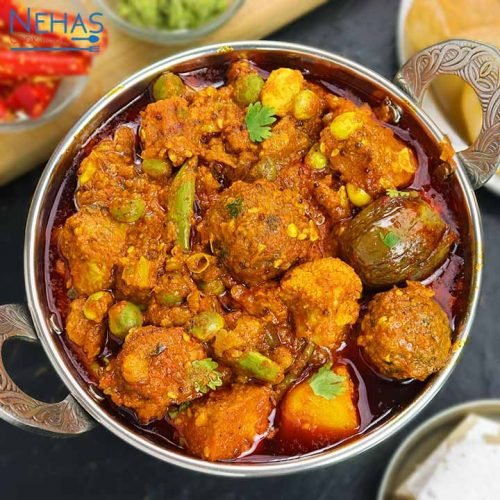
Stuffing the vegetables gives Undhiyu its signature layers of flavor.
- Take the green masala you prepared earlier.
- Stuff small portions of it inside the slit brinjals and raw banana pieces.
- Keep the remaining masala aside — it will be added to the main curry.
Pro Tip:
Make deep slits in the brinjals and banana pieces without cutting them through completely. This helps them hold the stuffing better and prevents them from breaking while cooking.
Step 4: Cook the Undhiyu
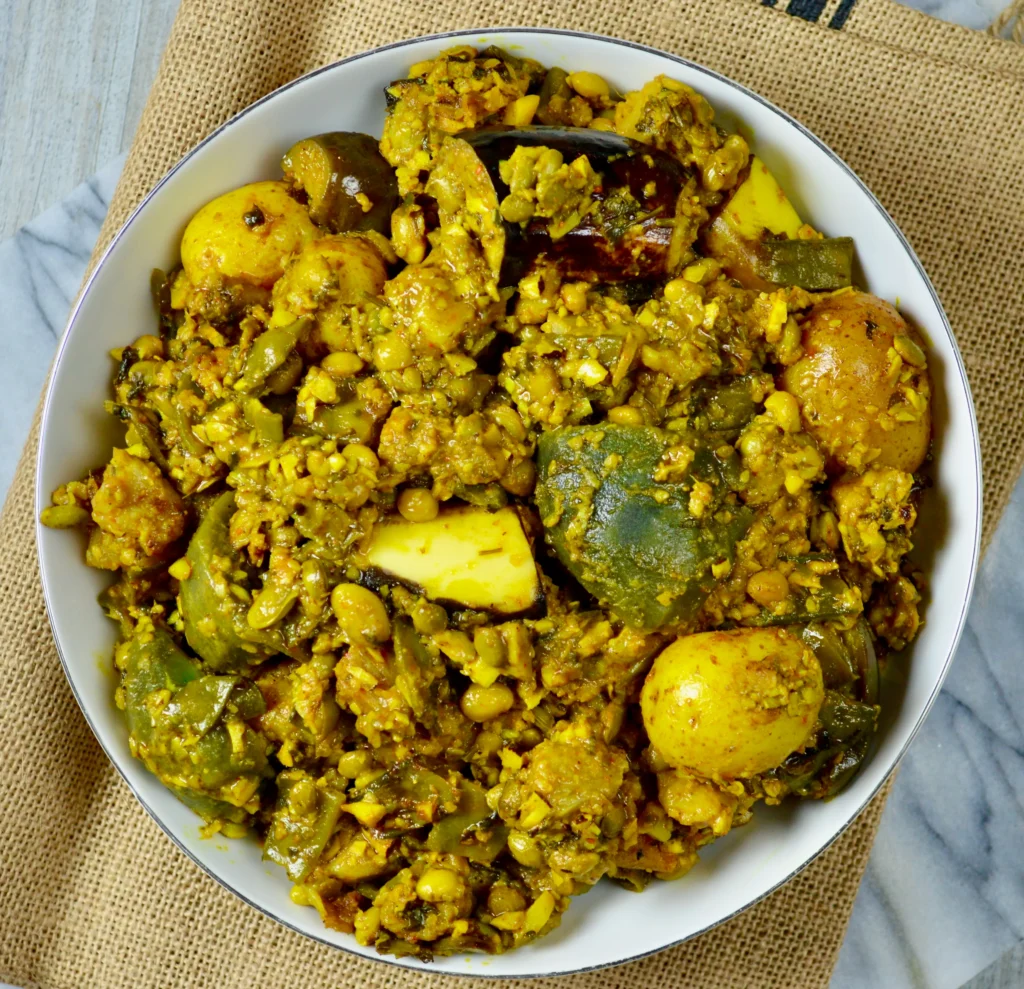
Now that all your components are ready, it’s time to bring everything together into one flavorful dish.
Option 1: Traditional Pan Method
- Heat 3 tablespoons oil in a large, deep pan or kadhai.
- Add a pinch of asafoetida, 1 teaspoon mustard seeds, and 1 teaspoon carom seeds. Let them splutter.
- Add potatoes, yam, and sweet potatoes first, as they take longer to cook.
- Sprinkle a little salt and sauté for 4–5 minutes.
- Next, add the papdi, green peas, and stuffed vegetables carefully.
- Pour in the remaining green masala, mix gently, and add ½ cup water to help it cook evenly.
- Cover the pan with a lid and cook on low flame for 20–25 minutes, stirring occasionally.
Once the vegetables are tender, add the fried muthiyas and mix carefully so they don’t break.
Cook for another 5 minutes, allowing the flavors to blend beautifully.

Option 2: Pressure Cooker Method (Faster)
- Follow steps 1–6 above, but use a pressure cooker instead of a pan.
- Add ½ cup water, close the lid, and cook for 1 whistle on medium flame.
- Let the pressure release naturally, then gently stir in the fried muthiyas.
Pro Tip:
Avoid over-stirring — Undhiyu tastes best when the vegetables retain their shape and texture.
Step 5: Garnish and Serve
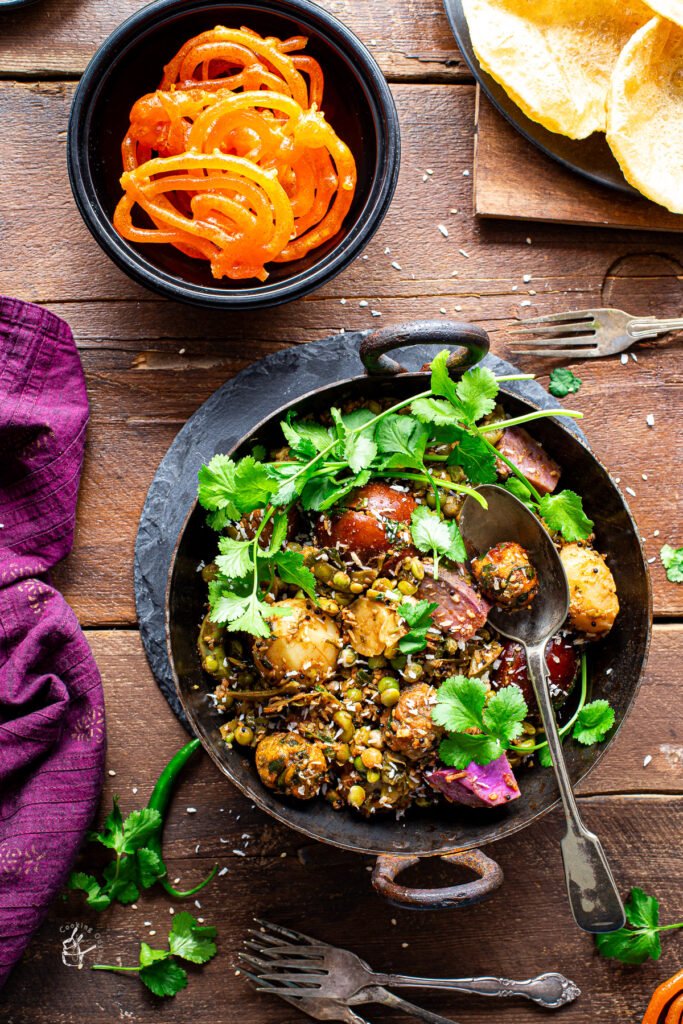
Your Undhiyu is now ready — rich, aromatic, and bursting with color!
Final Touches:
- Drizzle a spoon of lemon juice for brightness.
- Garnish generously with fresh coriander leaves and grated coconut.
- If you like, add a handful of sev or roasted peanuts on top for crunch.
Serving Suggestions:
Undhiyu is traditionally served with:
- Puris or phulkas — for a hearty, authentic Gujarati meal.
- Steamed rice and kadhi — for a comforting combination.
- Shrikhand or basundi — for a sweet, festive touch.
And of course, a side of chaas (buttermilk) makes the meal complete.
Pro Tip:
Undhiyu tastes even better the next day, as the flavors deepen overnight. Store leftovers in an airtight container and refrigerate — just reheat before serving.

Bonus Tips for Perfect Undhiyu
- Use Fresh Vegetables:
The dish shines when made with fresh, seasonal produce — especially winter vegetables like papdi, yam, and brinjal. - Don’t Skip the Muthiyas:
They soak up the masala beautifully and add a unique texture. If you’re short on time, use store-bought ones. - Adjust Spice Levels:
Traditional Undhiyu is flavorful but not too spicy. Adjust the number of green chilies based on your taste. - Balance Flavors:
Gujarati cuisine is known for its sweet-sour-spicy balance. A pinch of sugar or jaggery enhances the natural taste of the vegetables. - Cooking Oil:
Groundnut oil works best for authentic flavor, but you can use sunflower or mustard oil too. - Make it Vegan:
The dish is naturally vegan, so you don’t need to make any substitutions! - Clay Pot Version:
For a traditional twist, try cooking Undhiyu in an earthen pot on low flame. The smoky aroma is unmatched.
Why Undhiyu is Special
Undhiyu isn’t just a dish — it’s a culinary celebration of Gujarat’s love for food, family, and festivity. Prepared especially during Makar Sankranti (Uttarayan), it’s a meal that brings everyone together. Each bite reflects the essence of the region — vibrant, balanced, and full of life.
It’s also one of the most nutrient-rich Indian dishes, loaded with fiber, vitamins, and plant-based protein from the vegetables and fenugreek.
Final Thoughts
Cooking Gujarati Undhiyu might look elaborate, but when broken down into five easy steps, it’s surprisingly approachable. The beauty of Undhiyu lies in its layers — the mix of textures, colors, and flavors that unfold in every spoonful.
From the earthy sweetness of yams to the spicy kick of green masala and the crunch of muthiyas, every bite is a delicious reminder of Gujarat’s rich culinary tradition.
So, the next time you want to impress your guests or celebrate a special occasion, skip the usual curry — and serve a bowl of homemade Undhiyu, packed with love, tradition, and the warmth of a Gujarati kitchen.